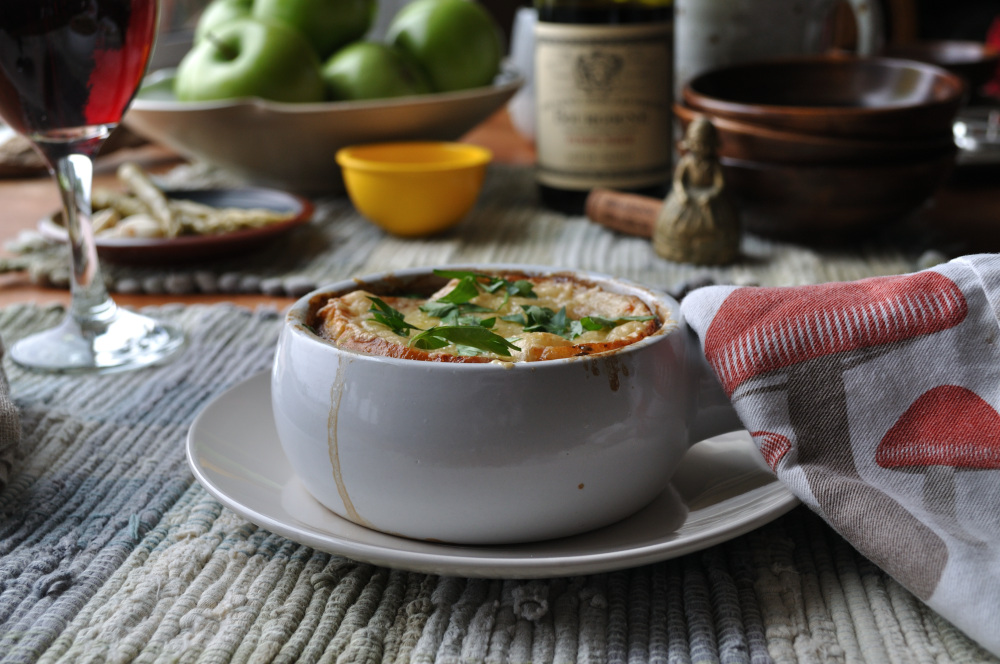
There are dishes that are instantly recognizable as culturally iconic. Classic French Onion Soup, Soupe à l’Oignon Gratinée, is one of those. It’s patient food. Nothing rushed, nothing flashy—just onions, time, a little wine, and attention. This version comes straight from Burgundy, where onion soup is less about bells and whistles and more about discipline: slow caramelization, good stock, and restraint.
Classic French Onion Soup from Burgundy
The magic lives in the onions. Thinly sliced and cooked low and slow in butter, they transform from sharp and sulfurous to deeply sweet, almost jammy. This is not a recipe where you multitask. Stir, scrape, and let time do the work. Rushing gives you blond onions and pale soup; patience gives you depth, colour, and that unmistakable savoury sweetness.
Use a good, heavy bottomed pot for this recipe. Even better if you have cast iron or an enamelled dutch oven. That will help to make your onion base browned and delicious, not burnt and bitter. If you see your post start to burn, remove from the heat and immediately deglaze with a splash of water. You can do this as many times as you need.
Nothing, and I do mean nothing, can save your soup from a burnt pot. That bitterness will taint everything, if needed, change your pot and keep on going.
Let’s Talk Onions
Not all onions behave the same once they hit the pot, and French onion soup is unforgiving in that way. The goal is sweetness, depth, and structure after a long, slow cook—not mush or bitterness.
Yellow onions are the gold standard. They have the ideal balance of sugar and sulfur, which means they caramelize evenly and develop deep savoury sweetness without tipping into syrup. As they cook, their sharpness mellows, their sugars concentrate, and you get that rich, rounded onion flavour that defines the soup. This is what most French cooks reach for, and for good reason.
White onions come in second. They’re slightly sharper and cleaner tasting, which can be nice, but they don’t develop quite the same depth or colour. They work in a pinch, but the soup will taste lighter and less complex.
Sweet onions sound right, but aren’t. Vidalia or other sweet varieties contain more water and less sulfur. They brown faster, but they can collapse into sludge and taste flat or sugary rather than savoury. French onion soup needs transformation, not shortcuts.
Red onions are best avoided. Their flavour stays assertive and their colour can muddy the broth, giving you a soup that looks darker but tastes less balanced.
Shallots can be a substitute, but I’d suggest you skip the sugar in this recipe, as it would make your soup FAR to sweet. Stick with the natural sweetness of the shallots themselves.
If you remember one thing: French onion soup isn’t about sweetness alone. It’s about how onions change over time—and yellow onions do that work better than any other.
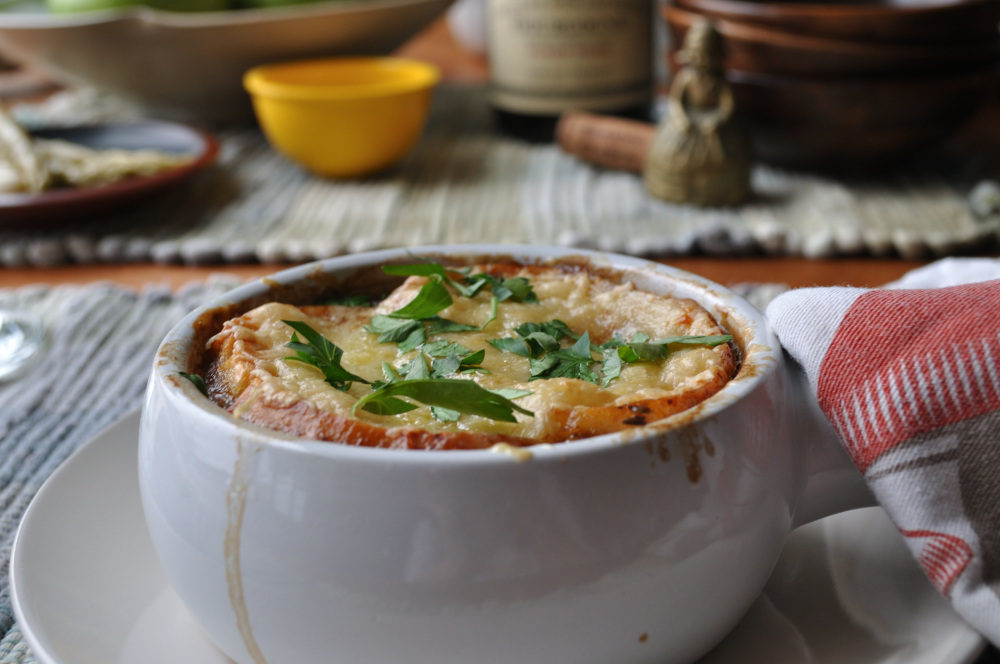
Traditional French Onion Soup Recipe
Once your onions are properly caramelized, they’re deglazed with red wine, not white in this recipe. Preferably a Burgundy pinot noir — lifting every browned bit from the pot. A couple of spoonfuls of flour lightly coats the onions, giving the broth subtle body without heaviness. This allows your croutons to float well, instead of sinking in a thin, loose broth.
Your best buy for this recipe is a good beef stock, not broth. The difference being the consistency when cold. A true stock contains collagen, and has a jelly-like consistency when cold because it’s make with roasted, simmered bones. Broth, which is most readily available, is liquid and thin. You can often find stock at your local butcher shop and sometimes health food stores. I could not. (The challenges of living in a remote, but spectacular, location)
Short of making your own stock, broth will suffice. It’s generally widely accepted as the same ingredient but we know better now, don’t we?
It’s the long, slow simmer that gently to marries flavours together rather than boiling them into submission.
Authentic Soupe à l’Oignon with Gruyère
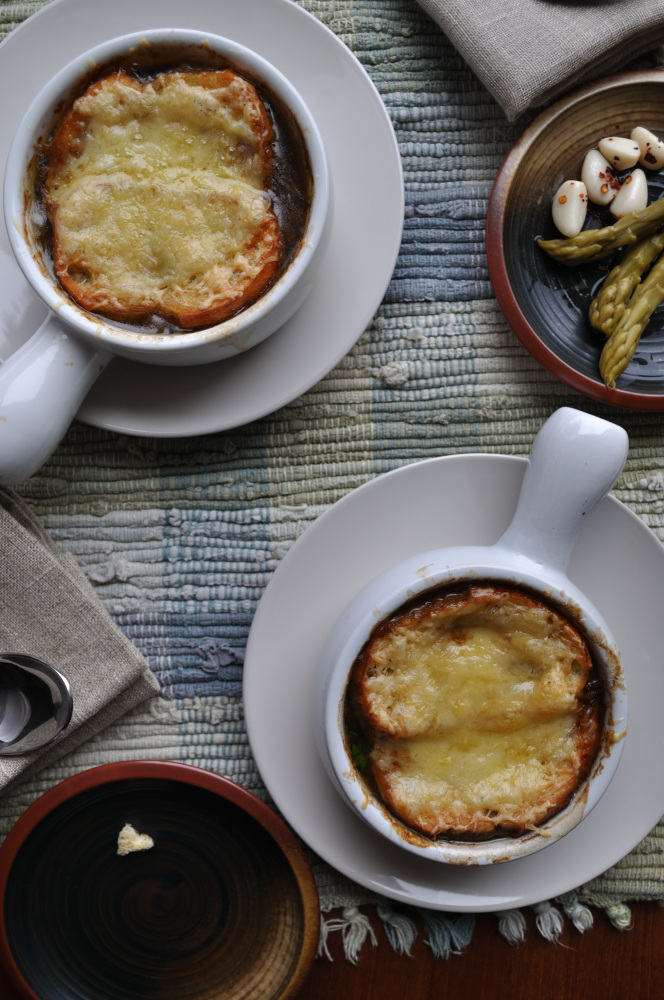
The finishing touch is classic and unapologetic: toasted, garlic rubbed baguette slices, floated on the surface, and blanketed, traditionally with either Comté or Gruyère cheese. Also acceptable is Parmesan and aged cheddar, for a little extra stringiness when melted. The one note; please; no mozzarella. It’s both too soft and too fatty.
Baked to finish in a 400°F (205°C) oven, the cheese melts and blisters, forming a golden crust that cracks under your spoon. This is not garnish—it’s structure, texture, and comfort all in one.
In France French Onion Soup isn’t a light lunch, it’s late night food. For when guests (and host) get the late night hungries, after many bottles of wine, Soupe à l’Oignon Gratinée it comes. To soak up all that wine in the belly, so everyone is refreshed and fuelled for another round!When done well, it tastes like warmth, care, and a long evening at the stove—exactly as it should.
Print
Classic French Onion Soup
- Total Time: 2 hours 30 minutes
- Yield: serves 6
Description
Classic French Onion Soup, Soupe à l’Oignon Gratinée, straight from Burgundy, made with deeply caramelized onions, beef stock, white wine, and melted Gruyère over toasted baguette.
Ingredients
- 3 - 4 medium/large yellow onions thinly sliced
- 6 garlic cloves, peeled, green germ removed, finely chopped
- 1/4 cup light cooking oil
- 1 tablespoon sugar
- 1 cup red wine
- 8 cups beef stock/broth or diluted veal stock concentrate
- 2 branches fresh thyme (1/2 teaspoon dried, or Herbes de Provence)
- 4 bay leaves
- 3 tablespoons butter
- 2 tablespoons all purpose flour
- pinch chili flakes (optional)
- salt & cracked black pepper to taste
- 1 baguette, sliced 1/4 inch thick
- 2 garlic cloves, whole, peeled
- olive oil to taste
- 2 cups shredded Gruyère cheese
Instructions
- Heat oil in a large heavy-bottomed pot over medium heat. Add onions, season lightly with salt. Cook slowly, stirring often.
- Once onions are transparent, add your sugar, continue cooking over medium heat for another 30 – 45 minutes until deeply caramelized and rich brown. Watch to bottom of your pot, to be sure you don’t burn your font. You’re looking for a rich, dark brown. If it starts to get too much colour, remove from the heat and deglaze your pot with a couple of tablespoons of water. You can do this as many times as necessary. Reduce your volume of onions to about one third.
- Degrease; off the heat, tilt the pot forward while pushing the caramelized onions upwards. Collect as much of the oil as you can.
- Return to the heat, add butter and garlic and red wine, scraping the bottom of the pot to release all browned bits. Reduce liquid by half.
- Sprinkle flour over the onions and stir for one minute to cook out the raw taste.
- Add beef stock, bay leaf, thyme, and black pepper. Bring to a gentle simmer and cook for a minimum of one hour. Reduce volume of liquid by a little over a quarter of the original volume. The ideal ratio is 50/50 broth to onions. Personally , I prefer a thicker soup, so I reduce by a third.
- In the meantime, make your croutons. Place slices of bread with a drizzle of olive oil in oven at 400°F (205°C) until golden brown. Rub each crouton on both sides with whole garlic cloves. Be generous, it makes all the difference. Reserve until needed.
- Returning to your soup, remove herbs. Taste and adjust seasoning.
- Ladle soup into oven-safe bowls, leaving a 1/2 inch for toppings.
- Top with toasted baguette slices and grated Gruyère (see notes on cheese below)
Notes
Notes on cheese: Gruyère, Comté, Aged cheddar, are all acceptable but PLEASE, no mozzarella. It’s soft and fatty and will make your soup greasy and oily.
- Prep Time: 30 minutes
- Cook Time: 2 hours
- Category: Dinner
- Method: Boiling
- Cuisine: French